
I work as a farm equipment maintenance specialist, and over the past decade, I’ve spent countless hours inspecting, replacing, and advising farmers about tractor tires. In my experience, tire choice is one of those decisions that quietly affects almost every part of farm productivity. I first started paying serious attention to tires when a customer came in one spring complaining that his tractor kept slipping while pulling a loaded fertilizer spreader across slightly wet soil. The machine itself was strong enough, but the tires had lost the sharpness of their tread edges, and the field traction just wasn’t there anymore. That situation stayed with me because it showed how something as simple as rubber contact with soil can determine whether a long workday ends smoothly or with frustration.
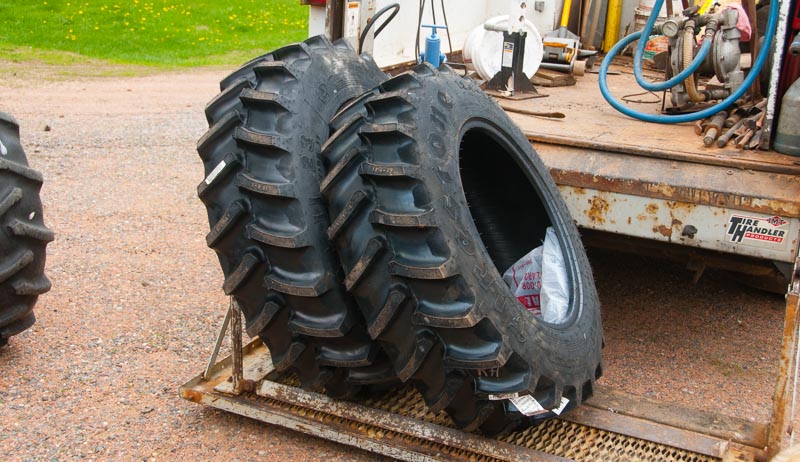
Most farmers I’ve worked with tend to think of tractor tires as a replacement item rather than a performance component. I remember inspecting a mid-sized orchard tractor for a grower who had been spending several thousand dollars every season repairing minor drivetrain stress problems. When I checked the equipment, the tires were underinflated and worn unevenly because the tractor was often driven on the roadside between two distant fields. The drivetrain wasn’t the main problem; the inconsistent tire pressure was causing excessive vibration and load imbalance. After correcting the pressure schedule and recommending a more suitable tread pattern for mixed terrain, the repair complaints dropped noticeably over the next planting cycle.
Tread design matters more than many people expect. In my shop, I usually explain that soil type should lead the decision rather than price alone. R-1 agricultural tires with deeper lugs work better on loose or tilled soil because they bite into the ground and push forward without excessive spinning. On the other hand, customers who operate around barns, storage yards, or paved access roads sometimes prefer R-4 industrial tread because it wears more slowly on hard surfaces. Last summer, one livestock operator switched from aggressive deep-lug tires to a more balanced tread because he was driving the tractor daily between the feeding area and pasture entrance. The old tires were digging too aggressively into the gravel path, throwing stones and wearing unevenly on the outer shoulder.
Load capacity is another area where mistakes happen frequently. I have seen farmers install larger tires simply because they looked stronger, without checking whether the axle and rim specifications matched the load rating. One customer brought a tractor that had developed strange steering resistance after he upgraded to wider rear tires. The problem was that the wider tires were running at a lower pressure than recommended, which changed the contact patch shape and caused extra friction during turning. Adjusting inflation according to the manufacturer chart solved the issue without any mechanical repair.
Climate and seasonal work patterns also influence what I suggest. In regions where soil stays wet longer into the planting season, I often advise keeping a spare set of moderately aggressive tires ready for early spring work. A vegetable farm owner I worked with used to rotate between two tire sets each year. He kept a high-traction set for plowing after rainfall and switched to a less aggressive tread for transportation and harvesting operations when the soil was firmer. That routine extended the life of both sets because each tire was used under more suitable stress conditions.
Maintenance habits can be just as important as the original purchase. Many tractors arrive at my workshop with tires that are perfectly serviceable but poorly maintained. Checking pressure once every two weeks during active farming seasons is something I strongly encourage. I’ve seen tractors lose efficiency simply because one rear tire was two or three PSI lower than the other, creating a slow sideways pull that the operator compensated for by constantly adjusting the steering wheel.
When advising new farmers, I usually remind them that tractor tires are part of the machine’s energy transfer system. Engine horsepower means little if the ground contact surface wastes that power through slipping or poor weight distribution. I learned this early in my career when a small dairy farm operator complained that his tractor felt weaker on uphill pasture slopes even though the engine was recently serviced. The issue disappeared after replacing worn tires that had lost their lug depth.
Choosing tractor tires is really about matching the machine to the work environment rather than picking the cheapest available option. Good tires reduce fuel waste, protect mechanical components, and make long working days feel less exhausting for the operator. From what I have seen across many seasons, farmers who invest thoughtfully in tire selection usually spend less time fixing traction-related problems and more time focusing on actual field work.